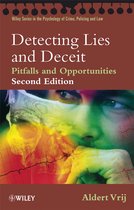
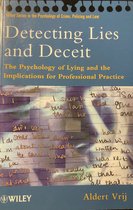
Detecting Lies & Deceit Pitfalls and Opportunities
Samenvatting
Why do people lie? Do gender and personality differences affect how people lie? How can lies be detected?
Detecting Lies and Deceit provides the most comprehensive review of deception to date. This revised edition provides an up-to-date account of deception research and discusses the working and efficacy of the most commonly used lie detection tools, including:
- Behaviour Analysis Interview
- Statement Validity Assessment
- Reality Monitoring
- Scientific Content Analysis
- Several different polygraph tests
- Voice Stress Analysis
- Thermal Imaging
- EEG-P300
- Functional Magnetic Resonance Imaging (fMRI)
All three aspects of deception are covered: nonverbal cues, speech and written statement analysis and (neuro)physiological responses. The most common errors in lie detection are discussed and practical guidelines are provided to help professionals improve their lie detection skills.
Detecting Lies and Deceit is a must-have resource for students, academics and professionals in psychology, criminology, policing and law.
Published in the Wiley Series in the Psychology of Crime, Policing and Law
Seried Editors:
Professor Graham Davies and Professor Ray Bull, University of Leicester, UK
Why do people lie?
Do gender and personality differences affect how people lie?
How can lies be detected?
Detecting Lies and Deceit provides the most comprehensive review of deception to date. This revised edition provides an up-to-date account of deception research and discusses the working and efficacy of the most commonly used lie detection tools, including:
- Behaviour Analysis Interview
- Statement Validity Assessment
- Reality Monitoring
- Scientific Content Analysis
- Several different polygraph tests
- Voice Stress Analysis
- Thermal Imaging
- EEG-P300
- Functional Magnetic Resonance Imaging (fMRI)
All three aspects of deception are covered: nonverbal cues, speech and written statement analysis and (neuro)physiological responses. The most common errors in lie detection are discussed and practical guidelines are provided to help professionals improve their lie detection skills.
Detecting Lies and Deceit is a must-have resource for students, academics and professionals in psychology, criminology, policing and law.
Productspecificaties
Inhoud
- Taal
- en
- Uitvoering
- Paperback
- Oorspronkelijke releasedatum
- 26 februari 2008
- Aantal pagina's
- 502
- Illustraties
- Nee
Betrokkenen
- Hoofdauteur
- Tweede Auteur
- Hoofduitgeverij
Informatie over de fabrikant
- Fabrikant Naam
- Easy Access System Europe Oü, 16879218
- Fabrikant Adres
- Mustamäe tee 50, 10621, Tallinn, Estonia - 10621 - Tallinn - EE
- E-mailadres of online contactformulier van de fabrikant
- gpsr.requests@easproject.com
Overige kenmerken
- Editie
- 2
- Extra groot lettertype
- Nee
- Product breedte
- 152 mm
- Product hoogte
- 30 mm
- Product lengte
- 228 mm
- Studieboek
- Ja
- Verpakking breedte
- 153 mm
- Verpakking hoogte
- 32 mm
- Verpakking lengte
- 226 mm
- Verpakkingsgewicht
- 710 g
EAN
- EAN
- 9780470516256
Productveiligheid
De verantwoordelijk marktdeelnemer in de EU zorgt voor het nakomen van verplichtingen op het gebied van productveiligheid.
Je vindt dit artikel in
- Categorieën
- Boek, ebook of luisterboek?
- Beschikbaarheid
- Taal
- Type boek
Documenten
Reviews
Kies gewenste uitvoering
Prijs inclusief verzendkosten, verstuurd door bol
Ophalen bij een bol afhaalpunt mogelijk
30 dagen bedenktijd en gratis retourneren via mijn bol
Dag en nacht klantenservice
Bekijk ook eens



Anderen bekeken ook
Working Memory Activities