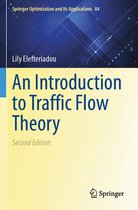
Springer Optimization and Its Applications84-An Introduction to Traffic Flow Theory
Samenvatting
This second edition of An Introduction to Traffic Flow Theory adds new material in several chapters related to advanced technologies including autonomy, the use of sensors and communications, and particularly congestion mitigation solutions that leverage connected and autonomous vehicles (CAVs).
This second edition of An Introduction to Traffic Flow Theory adds new material in several chapters related to advanced technologies including autonomy, the use of sensors and communications, and particularly congestion mitigation solutions that leverage connected and autonomous vehicles (CAVs). It also includes a new chapter that briefly outlines several mathematical analysis techniques commonly used in traffic flow theory, aiming to introduce students to some of the most frequently used tools available for traffic operational-related analysis. This new edition also includes several updates related to the most recent versions of the Highway Capacity Manual and the Green Book. This textbook is meant for use in advanced undergraduate/graduate level courses in traffic flow theory with prerequisites including two semesters of calculus, statistics, and an introductory course in transportation. The text would also be of interest to transportation professionals as a refresher in traffic flow theory or as a reference. Students and engineers of diverse backgrounds will find this text accessible and applicable to today’s traffic issues.
This text provides a comprehensive and concise treatment of the topic of traffic flow theory and includes several topics relevant to today’s highway transportation system. It provides the fundamental principles of traffic flow theory as well as applications of those principles for evaluating specific types of facilities (freeways, intersections, etc.). Newer concepts of Intelligent transportation systems (ITS) and their potential impact on traffic flow are discussed. State-of-the-art traffic flow research, microscopic traffic analysis, and traffic simulation have significantly advanced and are also discussed in this text. Real-world examples and useful problem sets complement each chapter.
This second edition of An Introduction to Traffic Flow Theory adds new material in several chapters related to advanced technologies including autonomy, the use of sensors and communications, and particularly congestion mitigation solutions that leverage connected and autonomous vehicles (CAVs). It also includes a new chapter that briefly outlines several mathematical analysis techniques commonly used in traffic flow theory, aiming to introduce students to some of the most frequently used tools available for traffic operational-related analysis. This new edition also includes several updates related to the most recent versions of the Highway Capacity Manual and the Green Book. This textbook is meant for use in advanced undergraduate/graduate level courses in traffic flow theory with prerequisites including two semesters of calculus, statistics, and an introductory course in transportation. The text would also be of interest to transportation professionals as a refresherin traffic flow theory or as a reference. Students and engineers of diverse backgrounds will find this text accessible and applicable to today’s traffic issues.
This text provides a comprehensive and concise treatment of the topic of traffic flow theory and includes several topics relevant to today’s highway transportation system. It provides the fundamental principles of traffic flow theory as well as applications of those principles for evaluating specific types of facilities (freeways, intersections, etc.). Newer concepts of Intelligent transportation systems (ITS) and their potential impact on traffic flow are discussed. State-of-the-art traffic flow research, microscopic traffic analysis, and traffic simulation have significantly advanced and are also discussed in this text. Real-world examples and useful problem sets complement each chapter.
Productspecificaties
Inhoud
- Taal
- en
- Uitvoering
- Paperback
- Oorspronkelijke releasedatum
- 09 mei 2025
- Aantal pagina's
- 337
- Illustraties
- Met illustraties
Betrokkenen
- Hoofdauteur
- Hoofduitgeverij
Informatie over de fabrikant
- Fabrikant Naam
- Springer Nature Customer Service Center GmbH
- Fabrikant Adres
- Europaplatz 3,69115 Heidelberg, Germany - 69115 - Heidelberg - DE
- E-mailadres of online contactformulier van de fabrikant
- ProductSafety@springernature.com
Overige kenmerken
- Editie
- 2
- Product breedte
- 155 mm
- Product lengte
- 235 mm
- Studieboek
- Nee
- Verpakking breedte
- 155 mm
- Verpakking hoogte
- 20 mm
- Verpakking lengte
- 235 mm
- Verpakkingsgewicht
- 540 g
EAN
- EAN
- 9783031540325
Productveiligheid
De verantwoordelijk marktdeelnemer in de EU zorgt voor het nakomen van verplichtingen op het gebied van productveiligheid.
Je vindt dit artikel in
Documenten
Reviews
Kies gewenste uitvoering
Prijs inclusief verzendkosten, verstuurd door bol
Ophalen bij een bol afhaalpunt mogelijk
30 dagen bedenktijd en gratis retourneren via mijn bol
Dag en nacht klantenservice