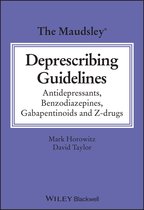
The Maudsley Prescribing Guidelines Series-The Maudsley Deprescribing Guidelines Antidepressants, Benzodiazepines, Gabapentinoids and Z-drugs
Afbeeldingen
Artikel vergelijken
- Engels
- Paperback
- 9781119822981
- 15 februari 2024
- 592 pagina's
Samenvatting
Comprehensive resource describing guidelines for safely reducing or stopping (deprescribing) antidepressants, benzodiazepines, gabapentinoids and z-drugs for patients, including step-by-step guidance for all commonly used medications, covering common pitfalls, troubleshooting, supportive strategies, and more.
Most formal guidance on psychiatric medication relates to starting or switching medications with minimal guidance on deprescribing medication. In 2023, the World Health Organisation and the United Nations called for patients, as a human right, to be informed of their right to discontinue treatment and to receive support to do so.
The Maudsley Deprescribing Guidelines fills a significant gap in guidance for clinicians by providing comprehensive and authoritative information on this important aspect of treatment.
This evidence-based handbook provides an overview of principles to be used in deprescribing. This is derived from fundamental scientific principles and the latest research on this topic, combined with emerging insights from clinical practice (including from patient experts).
Building on the recognised brand of The Maudsley Prescribing Guidelines, and the prominence of the authors’ work, including in The Lancet Psychiatry on tapering antidepressants (the most read article across all Lancet titles when it was released). The Maudsley Deprescribing Guidelines covers topics such as:
- Why and when to deprescribe antidepressants, benzodiazepines, gabapentinoids and z-drugs
- Barriers and enablers to deprescribing including physical dependence, social circumstances, and knowledge about the discontinuation process
- Distinguishing withdrawal symptoms, such as poor mood, anxiety, insomnia, and a variety of physical symptoms from symptoms of the underlying disorder that medication was intended to treat
- The difference between physical dependence and addiction/substance use disorder
- Explanation of why and how to implement hyperbolic tapering in clinical practice
- Specific guidance on formulations of medication and techniques for making gradual reductions, including using liquid forms of medication, and other approaches
- Step-by-step guidance for safely stopping all commonly used antidepressants, benzodiazepines, gabapentinoids and z-drugs, including fast, moderate and slow tapering regimens or schedules for each drug, and guidance on how to tailor these to an individual
- Troubleshooting issues which can arise on stopping these medications, including akathisia, withdrawal symptoms, acute or protracted, and relapse.
Written for anyone interested in safe deprescribing of psychiatric medications including psychiatrists, GPs, pharmacists, nurses, medical trainees, and interested members of the public. The Maudsley Deprescribing Guidelines is an essential resource on the subject that provides practical guidance on how to improve patient outcomes in this field of medicine.
The Maudsley® Deprescribing Guidelines
Comprehensive resource describing guidelines for safely reducing or stopping (deprescribing) antidepressants, benzodiazepines, gabapentinoids and z-drugs for patients, including step-by-step guidance for all commonly used medications, covering common pitfalls, troubleshooting, supportive strategies, and more.
Most formal guidance on psychiatric medication relates to starting or switching medications with minimal guidance on deprescribing medication. In 2023, the World Health Organisation and the United Nations called for patients, as a human right, to be informed of their right to discontinue treatment and to receive support to do so.
The Maudsley Deprescribing Guidelines fills a significant gap in guidance for clinicians by providing comprehensive and authoritative information on this important aspect of treatment.
This evidence-based handbook provides an overview of principles to be used in deprescribing. This is derived from fundamental scientific principles and the latest research on this topic, combined with emerging insights from clinical practice (including from patient experts).
Building on the recognised brand of The Maudsley Prescribing Guidelines, and the prominence of the authors’ work, including in The Lancet Psychiatry on tapering antidepressants (the most read article across all Lancet titles when it was released). The Maudsley Deprescribing Guidelines covers topics such as:
- Why and when to deprescribe antidepressants, benzodiazepines, gabapentinoids and z-drugs
- Barriers and enablers to deprescribing including physical dependence, social circumstances, and knowledge about the discontinuation process
- Distinguishing withdrawal symptoms, such as poor mood, anxiety, insomnia, and a variety of physical symptoms from symptoms of the underlying disorder that medication was intended to treat
- The difference between physical dependence and addiction/substance use disorder
- Explanation of why and how to implement hyperbolic tapering in clinical practice
- Specific guidance on formulations of medication and techniques for making gradual reductions, including using liquid forms of medication, and other approaches
- Step-by-step guidance for safely stopping all commonly used antidepressants, benzodiazepines, gabapentinoids and z-drugs, including fast, moderate and slow tapering regimens or schedules for each drug, and guidance on how to tailor these to an individual
- Troubleshooting issues which can arise on stopping these medications, including akathisia, withdrawal symptoms, acute or protracted, and relapse.
Written for anyone interested in safe deprescribing of psychiatric medications including psychiatrists, GPs, pharmacists, nurses, medical trainees, and interested members of the public. The Maudsley Deprescribing Guidelines is an essential resource on the subject that provides practical guidance on how to improve patient outcomes in this field of medicine.
Productspecificaties
Inhoud
- Taal
- en
- Bindwijze
- Paperback
- Oorspronkelijke releasedatum
- 15 februari 2024
- Aantal pagina's
- 592
Betrokkenen
- Hoofdauteur
- Mark Horowitz
- Hoofduitgeverij
- Wiley-Blackwell
Overige kenmerken
- Product breedte
- 168 mm
- Product hoogte
- 28 mm
- Product lengte
- 241 mm
- Verpakking breedte
- 168 mm
- Verpakking hoogte
- 28 mm
- Verpakking lengte
- 241 mm
- Verpakkingsgewicht
- 1089 g
EAN
- EAN
- 9781119822981
Je vindt dit artikel in
- Taal
- Engels
- Boek, ebook of luisterboek?
- Boek
- Studieboek of algemeen
- Studieboeken
- Beschikbaarheid
- Leverbaar
Kies gewenste uitvoering
Prijsinformatie en bestellen
De prijs van dit product is 48 euro en 99 cent.- Prijs inclusief verzendkosten, verstuurd door bol
- Ophalen bij een bol afhaalpunt mogelijk
- 30 dagen bedenktijd en gratis retourneren
- Dag en nacht klantenservice
Anderen bekeken ook







Rapporteer dit artikel
Je wilt melding doen van illegale inhoud over dit artikel:
- Ik wil melding doen als klant
- Ik wil melding doen als autoriteit of trusted flagger
- Ik wil melding doen als partner
- Ik wil melding doen als merkhouder
Geen klant, autoriteit, trusted flagger, merkhouder of partner? Gebruik dan onderstaande link om melding te doen.